


It’s no surprise that comic book movies have become some of Hollywood’s biggest blockbusters. But not every adaptation understands what makes the source material so special. In many ways, the best ones do more than bring familiar characters and spectacular battles to the big screen. Instead, they capture the spirit of the original stories, beautifully translate the distinct visual language, and even know when to make changes that strengthen the cinematic narrative.
So, whether it’s a sprawling hero conflict or a deeply personal character study, a great comic book movie makes you appreciate the source material in an entirely new way. And these are arguably some of the best to come out in the last 15 or so years. But don’t worry, not all of these center on people wearing capes and costumes.
6
‘Kingsman: The Secret Service’ (2014)

Eggsy’s (Taron Egerton) working-class life takes an unexpected turn when Harry Hart (Colin Firth)—a sharply dressed secret agent—recruits him into an elite independent intelligence organization. However, Eggsy must earn his place and compete against other candidates to become a Kingsman—all while tech billionaire Richmond Valentine (Samuel L. Jackson) develops a plan that threatens the entire world.
Adapted from Mark Millar and Dave Gibbons‘ iconic comics, Kingman: The Secret Service shines as it fully leans into the genre’s ridiculousness and ability to be surprisingly effective social commentary. Director Matthew Vaughn retains the source’s irreverence and class-conscious humor, while also building a fun and distinct British spy adventure around it all. The elaborate action sequences and exaggerated violence are also a plus, especially since they both capture the comic’s rebellious spirit (even if the panels and storylines don’t always).
5
‘Captain America: Civil War’ (2016)

As the public grows more fearful of the independent actions of superheroes, government bodies decide to push for the Sokovia Accords, an international agreement designed to regulate superhero movements. Sadly, this divides the Avengers, with Tony Stark (Robert Downey Jr.) supporting the legislation and Steve Rogers (Chris Evans) fearing political interference. Their disagreement becomes even more personal when Bucky Barnes (Sebastian Stan) is implicated in a terrorist attack.
Adapting Marvel’s sprawling Civil War comic storyline was never going to mean squeezing every character and subplot onto screen. Instead, the film distills the central ideological conflict into a deeply personal story about responsibility, loyalty, and the limits of superhero accountability. As a result, the changes to the source material work in favor of character and relationship development, while the epic battles deliver the superhero spectacle that most audiences expect. Just look at that devastating final confrontation between Steve and Tony. It’s effectiveness highlights how the most compelling comic conflicts stem not from who can throw the hardest punch, but from a heartbreaking difference in convictions.
4
‘Spider-Man: Brand New Day’ (2026)

Years after a spell erases everyone’s memory of Peter Parker (Tom Holland), the young hero finds himself living alone and protecting New York full-time—even as the growing demands begin to take an emotional and physical toll. But when a mysterious new telepathic threat emerges, Peter is not only forced to confront external dangers he cannot control, but also the strange mutations that are happening within him.
In a world filled with plenty of Spider-Man adaptations, Brand New Day stands out as it fully draws on the enduring appeal of Peter Parker’s central struggle: the tension between his hero responsibilities and ordinary human needs. It effectively builds on the traditions of its comics by exploring what happens when Peter has to rebuild his life without the support system that once defined it. Sure, the action and mega character reveals give the story an epic scale, but the emotional core of fully embracing one’s multifaceted identity remains its shining heart.
3
‘Scott Pilgrim vs. the World’ (2010)

Scott Pilgrim (Michael Cera) is a young musician who falls for the enigmatic Ramona Flowers (Mary Elizabeth Winstead). Unfortunately, there’s a major complication: to date her, he must defeat all of her seven evil exes, each of whom presents a progressively more outrageous challenge—whether that be superpowers, video-game logic, or the mere emotional baggage that comes with growing up.
Edgar Wright‘s adaptation of Scott Pilgram vs. the World is a particularly brilliant example of a film embracing the possibilities of its comic book source. Panels become split-screen composition, video-game mechanics shape the action, and visual effects turn emotional confrontations into literal battles. Better still, the movie preserves the source’s youthful energy and awkwardness, using its exaggerated style to reflect Scott’s immature understanding of life and his eventual growth of character. Think of this as a film that has perfected the art of visual language.
2
‘Logan’ (2017)

In a bleak future where mutants have all but disappeared, an aging Wolverine (Hugh Jackman) spends his time caring for a deteriorating Professor X (Patrick Stewart) while working as a chauffeur. But when a young mutant named Laura (Dafne Keen) arrives—and with eerily familiar abilities—Logan is forced back into a world of violence as dangerous pursuers are placed on their trail.
While Logan borrows ideas from the Old Man Logan comic, the film is not a direct adaptation. Instead, it takes the battered titular character and its bleak road-trip sensibility and reshapes them into a more intimate tale about aging, regret, and legacy. Jackman gives a career-best performance that perfectly conveys decades of exhaustion and regret, while the brutal display of violence adds a necessary weight to the stakes. It’s truly the best film in the X-Men franchise as it captures the emotional power of comics and storytelling at their most mature.
1
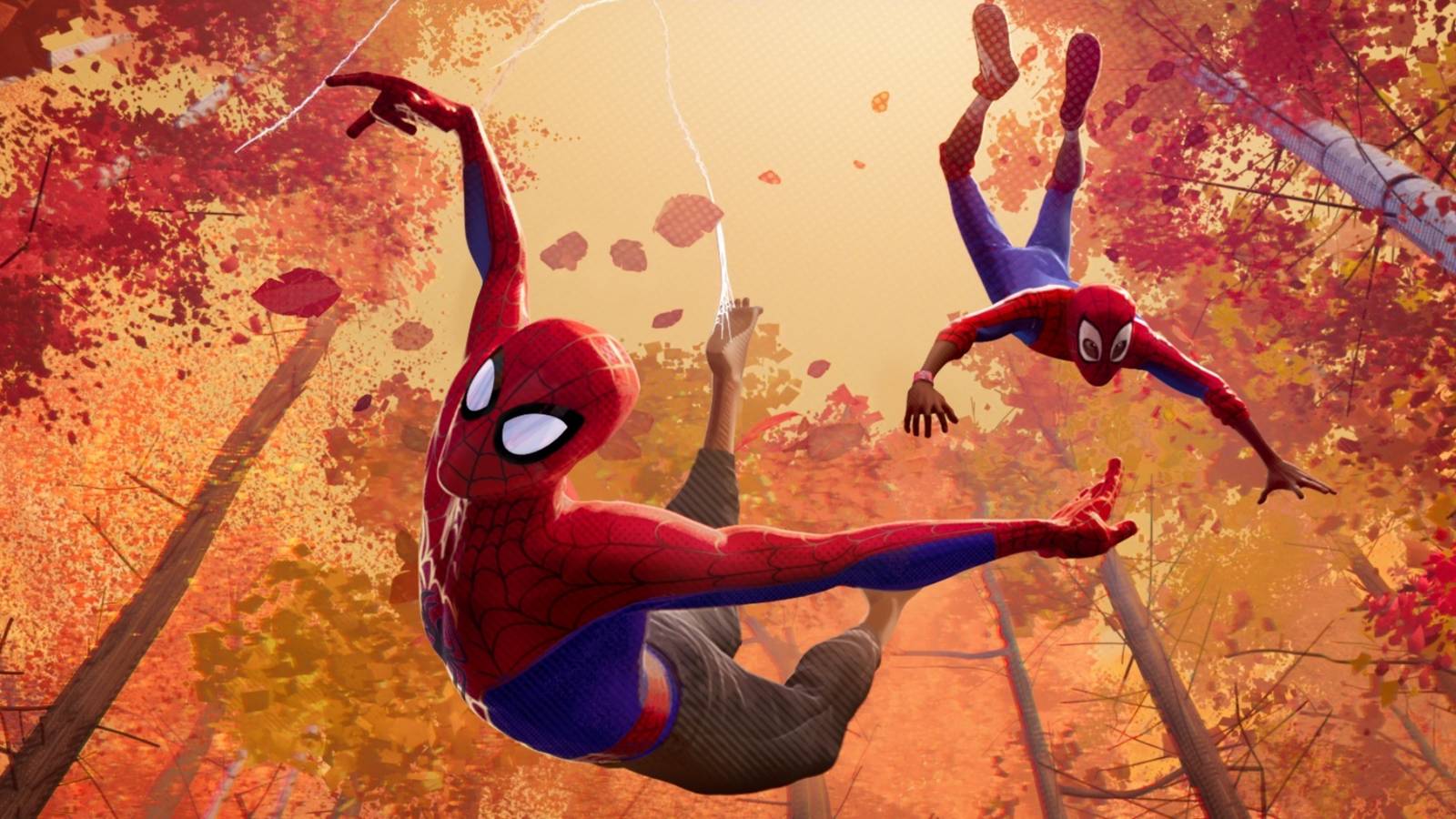
‘Spider-Man: Into the Spider-Verse’ (2018)

Miles Morales (Shameik Moore) is a Brooklyn teenager who suddenly gains spider-like abilities after being bitten by a genetically altered spider. But when a dangerous experiment opens a gateway between dimensions, Miles encounters several alternate versions of Spider-Man who not only help him navigate the complexities of hero-life but also save the universe from the villainous Kingpin (Liev Schreiber).
Spider-Man: Into the Spider-Verse has practically done the impossible: it has perfectly translated the experience of reading a comic book to the screen. Of course, much of this has to do with its style of animation, from its Ben-Day dots, expressive line work, and comic-panel composition—all of which give the film a visual identity that feels drawn rather than digitally polished. Crucially, these choices aren’t just decorative, as each spider-person has their own distinctive visual style. Add a series of thrilling action sequences and a genuinely moving coming-of-age tale, and you’ve got a film that doesn’t just merely adapt its source material. It fully brings it to life.
0 Comments